Impact of mismatched rates
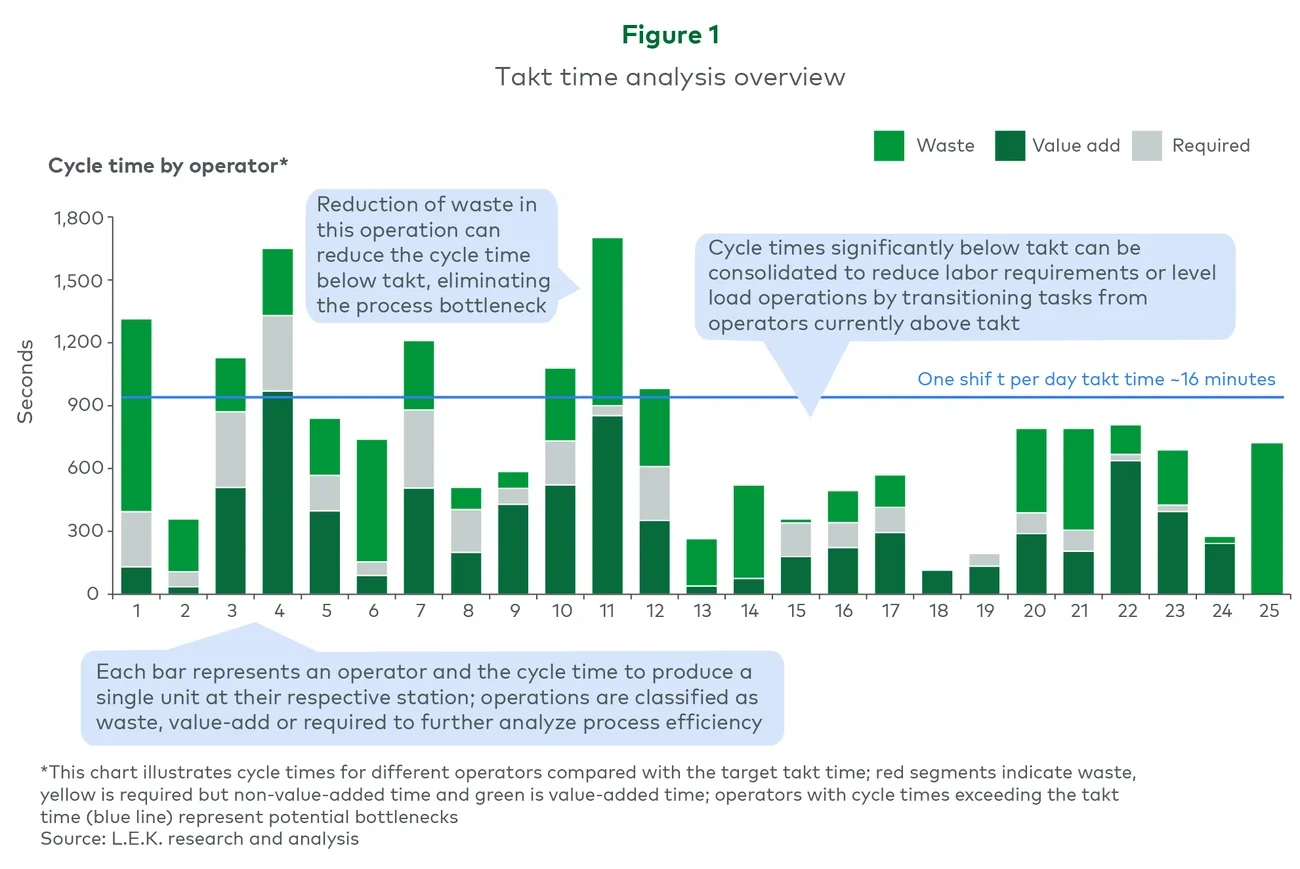
In manufacturing settings, mismatched takt times create immediate visible issues: work-in-process inventory builds up, resources sit idle and production targets are missed. When one station operates above takt time while others operate below it, the entire line becomes constrained by the slowest station.
This same principle applies across business operations. Consider these common scenarios where inefficiencies and capacity constraints emerge:
- Accounts payable: Teams facing uneven invoice volumes with fixed staffing
- Product development: Engineers managing variable design review and approval flows
- Customer service: Representatives handling unpredictable call volumes across rigid shifts
- IT support: Help desk teams managing fluctuating ticket submissions
- Claims processing: Insurance teams addressing seasonal volume spikes with fixed capacity
- HR operations: Recruitment teams managing concentrated hiring periods
- Marketing: Creative teams balancing multiple campaign deadlines across limited resources
- Store operations: Managers addressing surges in customer traffic with insufficient staff during peak hours
Optimizing business processes
Inefficiencies from mismatched rates arise wherever uneven workflows and resource allocation create bottlenecks. The same principles that address these challenges in manufacturing — aligning process speeds with demand — can drive efficiency, reduce costs and increase capacity across an organization.
Here’s how this framework applies to a customer service center:
- Map current state: Consider a customer service operation with fixed staffing across all shifts, leading to long wait times during peak periods and idle time during low-demand periods — a classic example of mismatched workflow rates.
- Analyze patterns: By tracking call volumes, patterns emerge: heavy Monday morning volumes versus lighter Friday afternoon traffic. This data enables calculation of optimal staffing levels for maintaining target response times.
- Optimize operations: The framework suggests several solutions: align shifts with demand patterns, create flexible capacity for peak periods, implement automation for routine inquiries and establish real-time monitoring to maintain optimal throughput.
By aligning process speeds with demand — the core principle of takt time — organizations can achieve dramatic improvements in cost centers outside of the manufacturing floor. In this case, the company would benefit from improved staff utilization and decreased wait times.
Success in action
L.E.K. Consulting recently partnered with a North American automotive accessory manufacturing conglomerate facing declining profits. Despite increased sales and production volumes during the COVID-19 pandemic, its production facility experienced negative earnings before interest and taxes in 2022. Through comprehensive assessment, we identified 11 opportunities for process redesign, such as optimizing production scheduling, adjusting material requirements planning parameters, redesigning the production flow and implementing targeted automation.
The results were transformative:
- 15% increase in throughput
- 20% improvement in cost efficiency
- 13 percentage point improvement in EBIT
Manufacturing productivity improvements alone accounted for 70% of the total EBIT uplift. This project shows how operational adjustments, guided by takt time principles, can unlock major improvements without significant capital investments.
Sustaining success
Success requires ongoing vigilance and a proactive approach to adapting processes as conditions evolve. Regular reassessment ensures operations remain balanced and aligned with demand patterns across all business functions.
Contact us to explore how manufacturing-inspired techniques can elevate your business process performance. Our Operations and Supply Chain team has extensive experience helping organizations optimize critical processes, reduce costs and achieve sustainable growth.
L.E.K. Consulting is a registered trademark of L.E.K. Consulting LLC. All other products and brands mentioned in this document are properties of their respective owners. © 2024 L.E.K. Consulting LLC